Pay scales, age limits, and rules change often, and each province has its own notifications. This article uses information that was available in October 2026. Always check the official advertisement and the latest government notification before you apply.
Many graduates ask about the subject specialist scale in Pakistan. They want to know the grade, the salary basics, the qualification, and the path ahead. Because job ads use short terms such as BPS-17, the details can feel confusing.
In simple words, a subject specialist is a government teaching post for people with a master’s degree. In the major provincial advertisements we reviewed, the post sits at grade 17 of the Basic Pay Scale. That is the same grade as a college lecturer and many officer-level jobs.
In this guide, you will learn what the scale means, what the post pays at the basic level, who can apply, and how promotion works. You will also solve 10 practice questions with answers. We use easy words and short sentences, so you can read fast and plan well.
Subject Specialist Scale in Pakistan at a Glance
Read this table first. It shows the main facts in one place.
| Point | Details |
|---|---|
| Post | Subject Specialist (school teaching cadre) |
| Usual scale | BPS-17 (also written BS-17 or Grade 17) |
| Common minimum education | Master’s degree or BS in the relevant subject |
| Common recruiting body | Provincial public service commission, as named in each ad |
| Next promotion (Punjab rules) | Senior Subject Specialist, BS-18 |
| Important warning | Rules differ by province and change over time |
Now let us look at each point in detail.
What Does Scale Mean in Pakistan’s Pay System?
In Pakistan, the government groups its jobs into 22 grades. This system is called the Basic Pay Scale, or BPS. Grade 1 covers the most junior jobs, such as support staff. Grade 22 covers the most senior posts, such as federal secretaries.
Each grade has a starting pay, which people call the minimum basic pay. It also has a yearly increment. An increment is a small raise that you receive for each year of service, until you reach the top step of that grade.
So when someone talks about the scale of a subject specialist, they mean the grade of the post. In most ads, that grade is 17. A higher grade means more pay, more duties, and a higher rank.
What Is a Subject Specialist?
A subject specialist is a teacher with deep knowledge of one subject, such as physics, English, or mathematics. Most subject specialists teach senior classes in government higher secondary schools. They also guide younger teachers and help improve the quality of teaching.
Their work usually includes four main tasks. First, they teach their subject to senior students. Second, they prepare students for board exams. Third, they help plan lessons and tests. Finally, they support school heads with academic matters.
The post differs from a general school teacher. A general teacher may teach many subjects. In contrast, a subject specialist focuses on one subject and holds a higher grade.
If you want to learn what “subject” means in education, read our guide on subject in detail.
Subject Specialist Scale in Pakistan: Is It Really BPS-17?
Yes, in the advertisements we checked, the post sits at grade 17. For example, a recent Punjab Public Service Commission style advertisement listed Subject Specialists at BS-17. Similarly, a Sindh advertisement from the School Education and Literacy Department listed Subject Specialists at BPS-17.
However, there are three cautions. First, each province controls its own service rules. Second, grade names may change after restructuring. Third, special schools and other departments may use different titles.
Therefore, treat BPS-17 as the common answer, and then confirm it in the advertisement for your province. The ad always states the grade next to the post name.
What Does BPS-17 Pay in 2026?
Pay is the question that students ask most. Here is what we found, and what you should keep in mind.
Several websites report that the federal government issued Revised Basic Pay Scales 2026 through a Ministry of Finance memorandum dated 21 July 2026. They say the revised scales took effect on 1 July 2026. For BPS-17, these sources list a minimum basic pay of Rs 54,140, an annual increment of Rs 4,110, and a maximum of Rs 136,340.
Please note four points.
First, these are federal figures. Provinces announce their own pay scales, and they often follow the federal pattern. Still, the dates and details may differ.
Second, basic pay is not your total salary. Allowances such as house rent, medical, and conveyance are added on top. As a result, the gross pay is much higher than the basic pay.
Third, some websites show different figures, and a few look wrong. The sources we found are secondary websites, not official documents.
Finally, always check the official notification. If you are applying in a province, look for that province’s finance department notification.
Qualification and Eligibility
Qualification rules come from the service rules of each province. Here is what the sources show.
| Province | Reported minimum education | Note |
|---|---|---|
| Punjab | Master’s degree (Arts or Science) in the relevant subject, second division, from a recognized university | Older Punjab service rules also list a teaching degree such as B.Ed, M.Ed, or MA Education, second division |
| Sindh | Master’s or equivalent degree in the relevant subject with at least 50% marks, from an HEC-recognized university | Based on a Sindh advertisement for BPS-17 posts |
In recent years, advertisements have also accepted a 16-year BS degree in the relevant subject. In addition, many ads say that a B.Ed or M.Ed is an advantage. Some ads make it a requirement.
Age limits vary by advertisement. Some ads set a base range of 21 to 35 years with extra years for relaxation. Other ads set a lower range. Therefore, read the age rule in your own advertisement.
For the Punjab rules, you can read the Punjab School Education Department service rules PDF. Note that this file is older, so newer ads may change some details.
How to Apply: A Simple Step-by-Step Plan
Use these steps to prepare for any subject specialist advertisement.
Step 1: Read the advertisement slowly. Check the subject, the grade, the number of seats, the domicile rule, and the last date.
Step 2: Check your degree. Make sure your degree matches the subject. For example, an English post needs a degree in English.
Step 3: Gather your documents. Usually you need your degrees, transcripts, domicile, identity card, and photographs. Keep scanned copies ready.
Step 4: Apply on the official portal. The ad names the recruiting body. In Punjab, this is often the public service commission. Pay the fee, and save your receipt.
Step 5: Prepare for the test. Study the syllabus in the ad. Then practice past papers.
Step 6: Watch for the roll number slip. After the deadline, the body publishes the test date and venue. Check the site often.
Promotion Path After Subject Specialist
Government careers move in steps. Here is the path that the Punjab rules describe.
First, a Subject Specialist can become a Senior Subject Specialist in grade 18. The Punjab rules list five years of service and a short training course as the requirement. Next, a Senior Subject Specialist can move to a grade 19 post, such as a district education officer role. The rules list about twelve years of service and a longer training course for this step.
Timelines and titles change after reforms. So, treat these numbers as a guide. Your appointment letter and the latest service rules give the final answer.
Meanwhile, you also gain yearly increments. Over time, your basic pay rises even if you stay in the same grade.
Subject Specialist vs SST vs Lecturer vs Headmaster
Students often confuse these four posts. This table shows the usual grades from a recent Punjab advertisement.
| Post | Usual grade | Where they work |
|---|---|---|
| Secondary School Teacher (SST) | BS-16 | Secondary schools |
| Subject Specialist | BS-17 | Higher secondary schools |
| Lecturer | BS-17 | Colleges |
| Headmaster or Headmistress | BS-18 | School head |
As you can see, a subject specialist ranks above an SST and equals a lecturer in grade. A headmaster ranks above both.
Subject Specialist Scale in Pakistan: Tips to Prepare
Now let us turn to the test. A good plan can raise your chance of success.
First, master your subject. Most of the paper tests your degree-level knowledge, so revise your main books. Second, learn the general knowledge topics, such as Pakistan studies, current affairs, and Islamic studies. Third, practice English grammar, because many papers include it. If you need help, our guides on subject-verb agreement for CSS and subject and verb agreement MDCAT teach a very common topic.
Also, solve past papers under a timer. This builds speed and shows your weak areas. Finally, keep your documents ready early. Many candidates lose chances because of small paperwork mistakes.
Common Myths About the Subject Specialist Post
Some ideas about this post are wrong. Let us fix them.
| Myth | Fact |
|---|---|
| “Every province has the same rules.” | Each province sets its own rules and dates. |
| “Basic pay equals total salary.” | Allowances raise the gross pay. |
| “Any master’s degree works.” | The degree must match the subject in the ad. |
| “The grade never changes.” | Promotion moves you to grade 18 and higher. |
| “A blog is enough to confirm pay.” | Only the official notification is final. |
Scale of Subject: Do Not Mix Up the Meanings
The phrase “scale of subject” can mean different things. In this article, we used it for the job grade of a subject specialist.
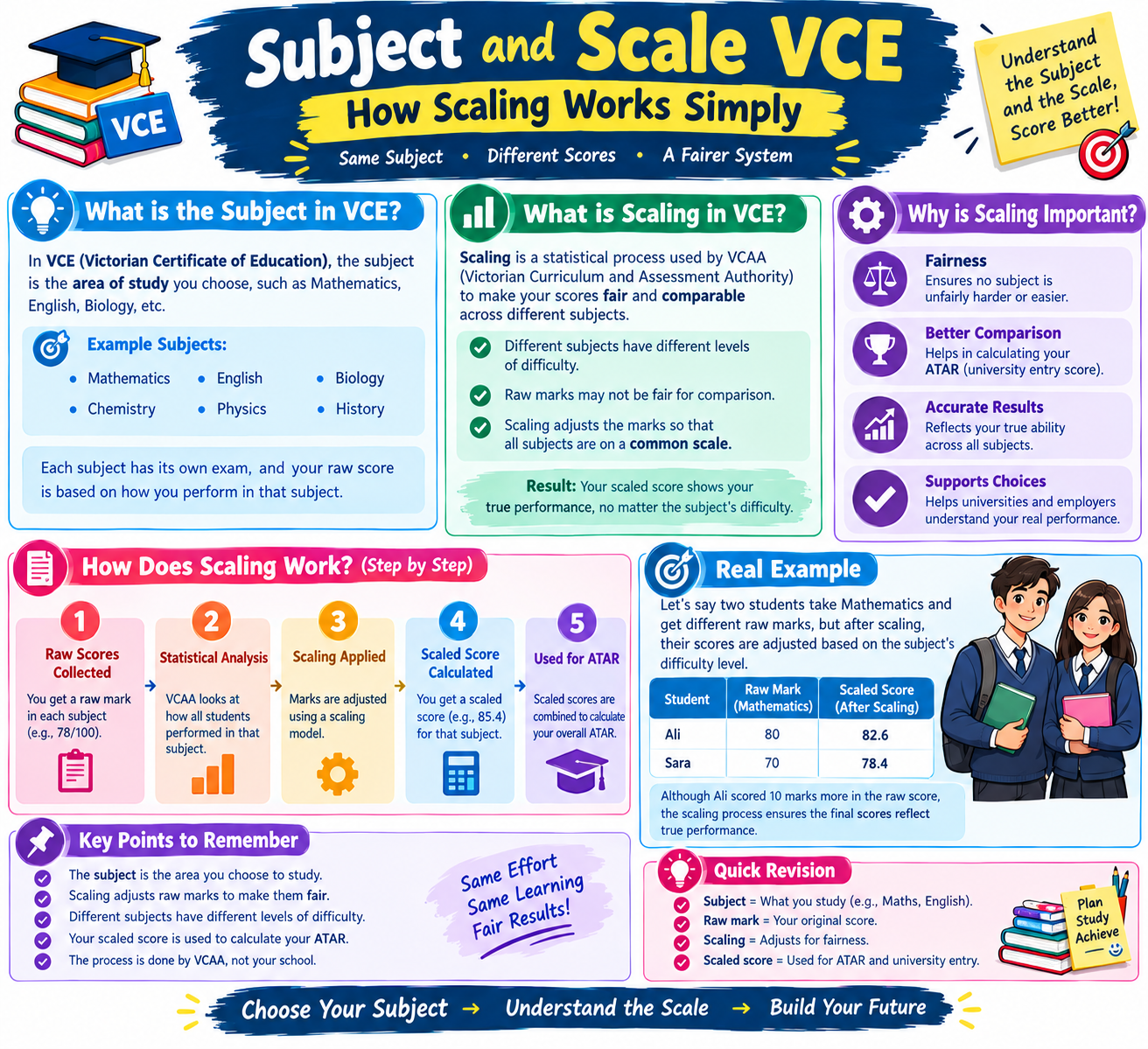
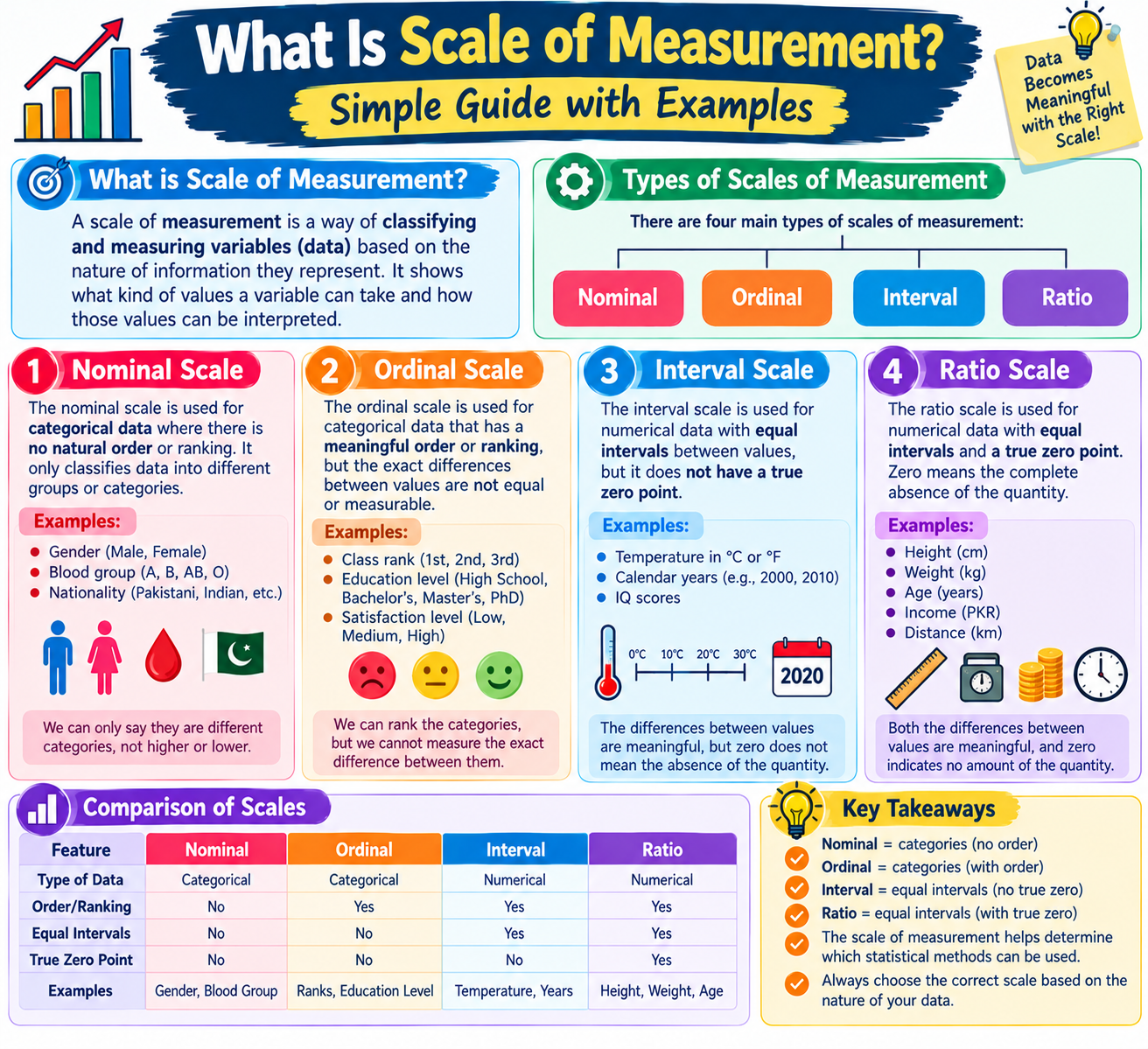
However, in some education systems, subject scaling means that exam marks in some subjects count for more than marks in others when ranks are made. Also, in research, scales of measurement are the levels at which data are measured. These are different topics, and we explain them in separate guides on this site.
Quick Revision Table
Read this table before your test.
| Idea | Key fact |
|---|---|
| BPS | Basic Pay Scale with 22 grades |
| Subject specialist grade | Usually BPS-17 |
| Next promotion | Senior Subject Specialist, grade 18 |
| Minimum education | Master’s or BS in the relevant subject |
| Pay | Basic pay plus allowances |
| Final source | Official ad and notification |
Practice Questions on Subject Specialist Scale in Pakistan
Try these 10 questions on your own first. The answers come next.
- Which grade does a subject specialist usually hold?
- What does BPS stand for?
- How many grades does the BPS system have?
- In Punjab, which degree level is the base requirement for a subject specialist?
- Which post ranks higher, SST or Subject Specialist?
- What is the next promotion post after Subject Specialist in Punjab?
- True or false: Annual increments raise your basic pay each year.
- Which body often recruits Subject Specialists in Punjab?
- Which source is final for pay and rules: a blog or the official notification?
- True or false: All provinces use exactly the same rules.
Answers and Short Explanations
- BPS-17, also written BS-17.
- Basic Pay Scale.
- 22 grades, from BPS-1 to BPS-22.
- A master’s degree in the relevant subject, with the second division in the Punjab rules.
- Subject Specialist, because BS-17 is higher than BS-16.
- Senior Subject Specialist, in grade 18.
- True. An increment adds to basic pay each year until the top step.
- The Punjab Public Service Commission, as stated in many ads.
- The official notification.
- False. Each province sets its own rules.
If you score 8 or more, you know the basics well. If you score less, reread the sections on the scale and eligibility.
Conclusion: Subject Specialist Scale in Pakistan Made Simple
The subject specialist scale in Pakistan is usually BPS-17. That grade matches a college lecturer and sits above a secondary school teacher. With time, you can move up to grade 18 and beyond.
Keep four points in mind. First, confirm the grade and rules in your own advertisement. Second, remember that basic pay is only part of your salary. Third, match your degree to the subject in the ad. Finally, rely on official notifications, not on blogs alone.
In most provincial advertisements, the subject specialist post sits at BPS-17, also written BS-17. That is the same grade as a college lecturer. Always confirm the grade in your own advertisement.
Punjab advertisements list the post at BS-17. Promotion to Senior Subject Specialist moves it to BS-18, according to the Punjab service rules.
A Sindh advertisement from the School Education and Literacy Department listed Subject Specialists at BPS-17. Check the latest ad for current details.
Ads usually ask for a master’s degree or a 16-year BS in the relevant subject. Punjab rules mention the second division. A Sindh ad asked for at least 50% marks.
Several websites report a federal minimum basic pay of Rs 54,140 under the revised 2026 scales. Provinces announce their own scales, so check the official notification for your province.
No. Your total salary includes allowances such as house rent, medical, and conveyance. Therefore, gross pay is higher than basic pay.
Yes. In the ads we reviewed, an SST sits at BS-16 and a subject specialist at BS-17.
It depends on the advertisement. Some ads require it, and others only list it as an advantage. Read the ad for your province.
Promotion follows the service rules. In Punjab, a subject specialist can become a Senior Subject Specialist in grade 18 after a set period of service and training.
Check the website of the provincial public service commission or the testing service named in the ad. Also check the School Education Department site of your province.